Erick Entrata
Urology Suite Manager
Kent and Canterbury Hospital
East Kent Hospitals University NHS Foundation Trust

Abstract

At East Kent Hospitals University NHS Foundation Trust, patients with prostate cancer who undergo a robotic-assisted laparoscopic prostatectomy (RALP) are discharged with an indwelling urethral catheter, and traditionally return 7–10 days later to a nurse-led clinic for a trial without a catheter (TWOC). This service has seen an increase in demand, causing a substantial delay in patients being seen in a timely manner. A service improvement plan was undertaken to trial patients being supervised on the safe removal of their catheters at home with the urology clinical nurse specialist on the phone. Self-TWOC not only reduced the waiting list and costs, but it aligns with the neighbourhood health framework, part of the NHS’s 10-year plan (NHS England, 2026a). This article describes the process, implementation, and results.
 

Introduction 

Prostate cancer is the most commonly diagnosed cancer in the UK with around 55,900 new cases of prostate cancer in the UK every year, and 12,300 deaths recorded from 2022–24 (Cancer Research UK, 2026). The survival rate is 78.9% (Cancer Research UK, 2026). 
 
Robotic-assisted laparoscopic prostatectomy (RALP) is a standard surgical treatment for clinically localised prostate cancer, performed using the Da Vinci robotic system. Evidence demonstrates favourable long-term urinary and sexual function outcomes following RALP (Lunas et al, 2026). Kent and Canterbury Hospital was the first hospital in south-east England, outside of London, to offer this advanced treatment option (East Kent Hospitals University Foundation NHS Trust, 2024). Approximately 14–18 RALPs are performed each month at Kent and Canterbury Hospital.
 
At East Kent Hospitals University NHS Foundation Trust, patients with prostate cancer who undergo a RALP are discharged 24 hours after surgery with an indwelling urethral catheter. They then come back to a nurse-led clinic in the urology outpatient department for a trial without a catheter (TWOC), which assesses an individual’s ability to void effectively without using an indwelling urinary catheter (Saville and Bewley, 2025). Given the pressures on this service which were preventing these patients being seen in a timely manner, a wider multidisciplinary team discussion took place to look for possible solutions. This cohort of patients has an excellent success rate of passing their TWOCs so it was suggested that these could be performed at home, with telephone support from a clinical nurse specialist.  
 
The presence of an indwelling catheter is related to lower patient satisfaction and (perceived) quality of life and higher rates of catheter-related complications (Christiaans et al, 2025). Traditionally, TWOC procedures can be costly, resource intensive, and inconvenient for patients, particularly those with mobility issues or chronic conditions (Saville and Bewley, 2025). The self-TWOC improves quality of care by reducing travel burden, improving convenience, and enabling care closer to home, which aligns with the NHS’s Long-Term Plan (NHS England, 2019) and the Neighbourhood Health Framework (NHS England, 2026a). Removal of the catheter at home is a safe, effective, and well-received alternative to clinic-based catheter removal, offering clinical, economic, and experiential benefits for post-RALP patients (Lunas et al, 2026). 
 

Research supporting self-TWOC 

Lunas et al (2026) conducted a cross-sectional study comparing self-TWOC with clinic removal of the catheter following RALP. They found that self-TWOC was effective, with no re-catheterisations or urinary tract infections reported, and they had high levels of patient satisfaction. Of 51 self-TWOC patients, 36 completed a questionnaire relating to patient satisfaction – 94% felt very or somewhat satisfied with the procedure. All patients felt adequately prepared, 97% found catheter removal very or somewhat easy, and 94% would opt for self-TWOC again.
 
Rahman et al (2025) evaluated home catheter removal (equivalent to TWOC) for 180 patients who needed a catheter for over 12 hours following urology surgery. All 180 patients successfully removed their catheter at home and did not need to attend the emergency department within 30 days for catheter-related issues. Of these patients, 96% were happy to recommend the service to others, with no reported difficulty related to catheter removal.
 
Self-TWOC is not new to the world of urology. Braungart and Goyal (2019) performed a prospective study in a paediatric urology centre over a 12-month period, including 38 patients ranging from 9 months–12 years of age. Parents of eligible patients were instructed verbally about how to remove the catheter and given an information leaflet, which included the date for removal. Telephone follow-up was undertaken after removal to assess the outcome, and 92% (35) successfully removed the catheter at home. Those unable to remove the catheter presented to the emergency department. The study demonstrated that self-TWOC is a safe and successful alternative to catheter removal by a health-care professional. Advantages include improved patient and parent experience, and reduction in healthcare costs.

The East Kent Hospitals University Foundation NHS Trust pathway

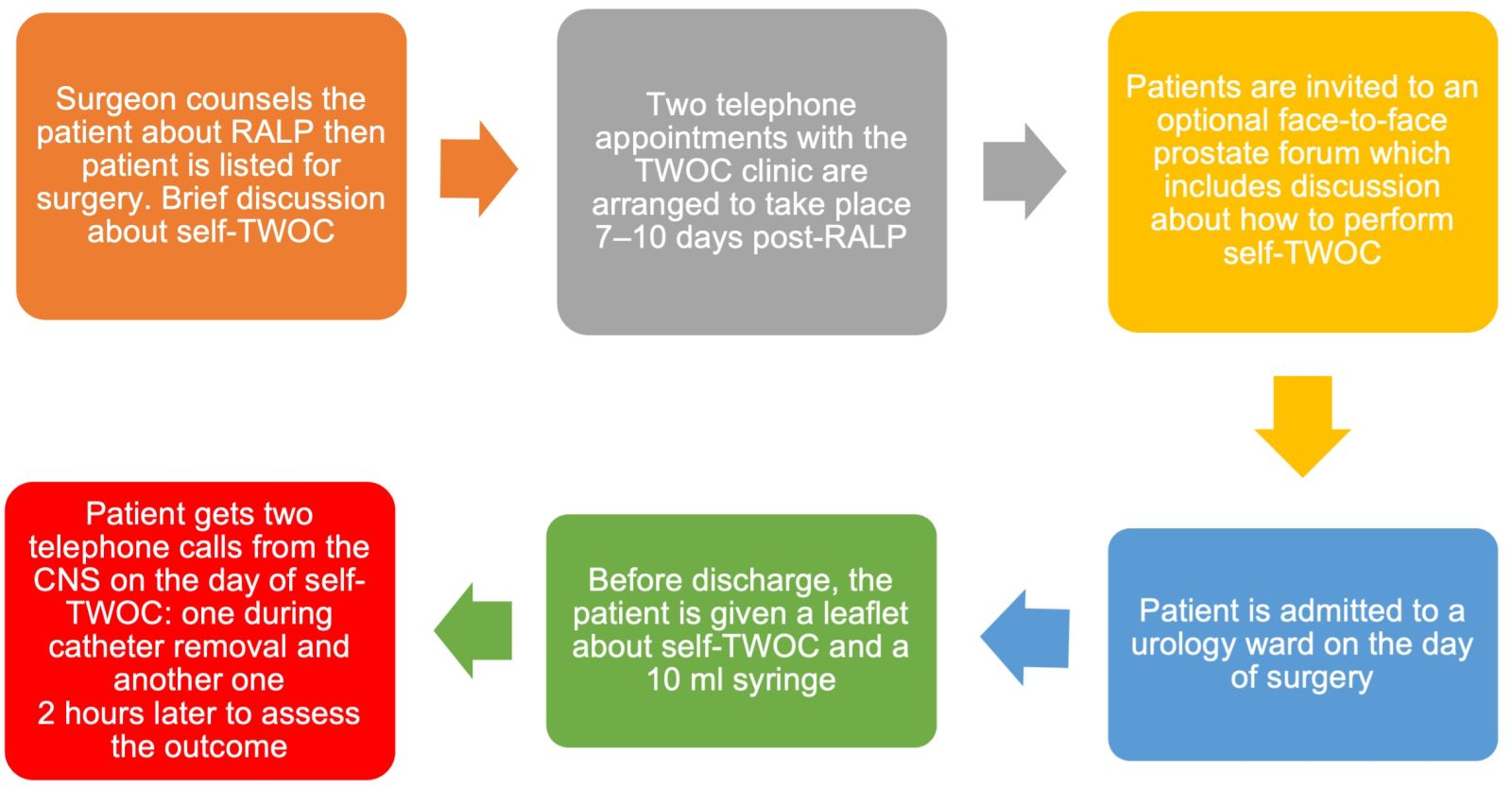
The idea of performing a self-TWOC procedure can be overwhelming for patients which risks them refusing to perform this. In view of this, a local pathway was developed (Figure 1) to outline how the message would be delivered to the service user in an acceptable and engaging manner. This included an optional face-to-face prostate forum involving nurses and other patients, covering RALP expectations, recovery, erectile dysfunction, rehabilitation, support groups, and introduction to self-TWOC.

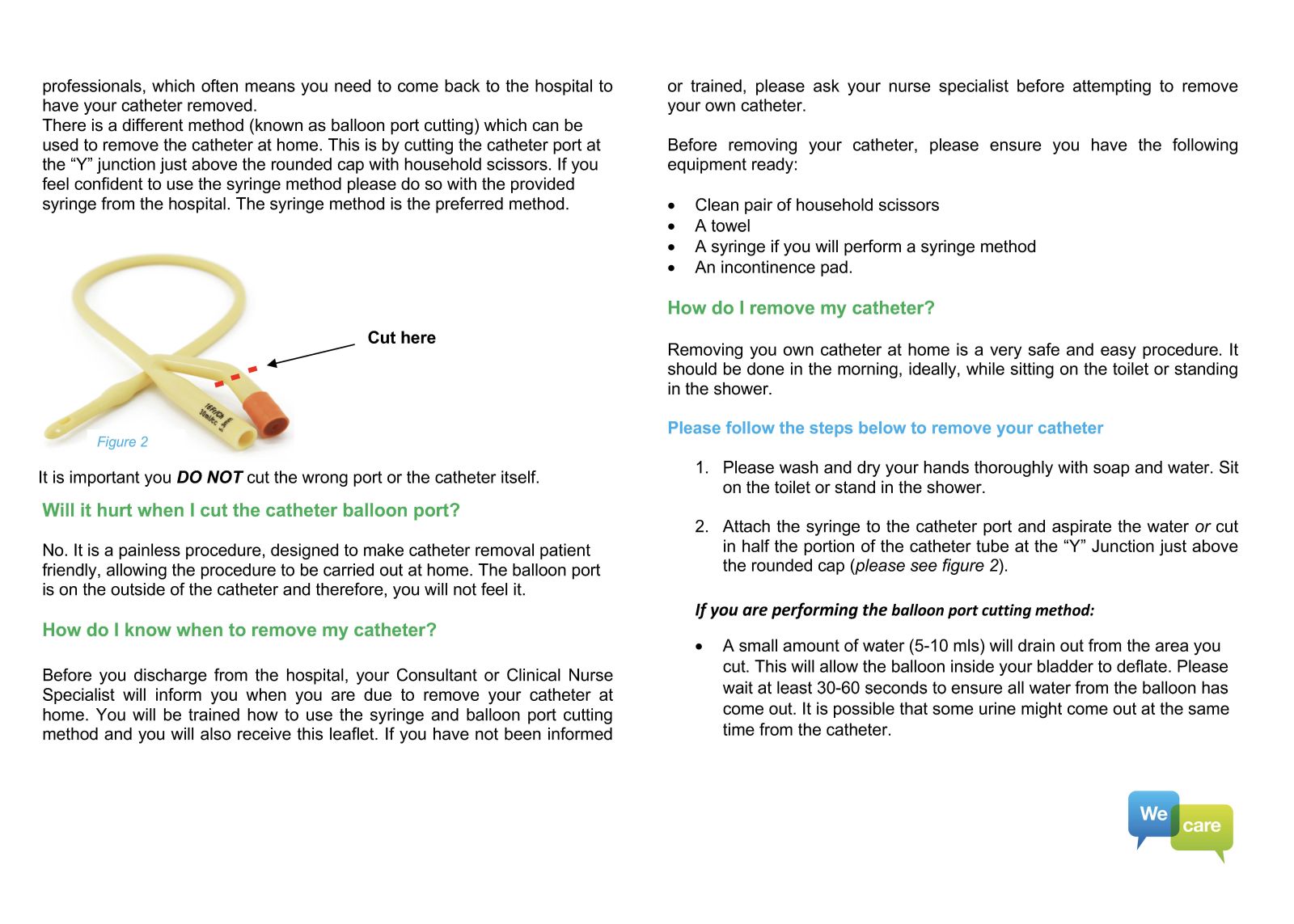
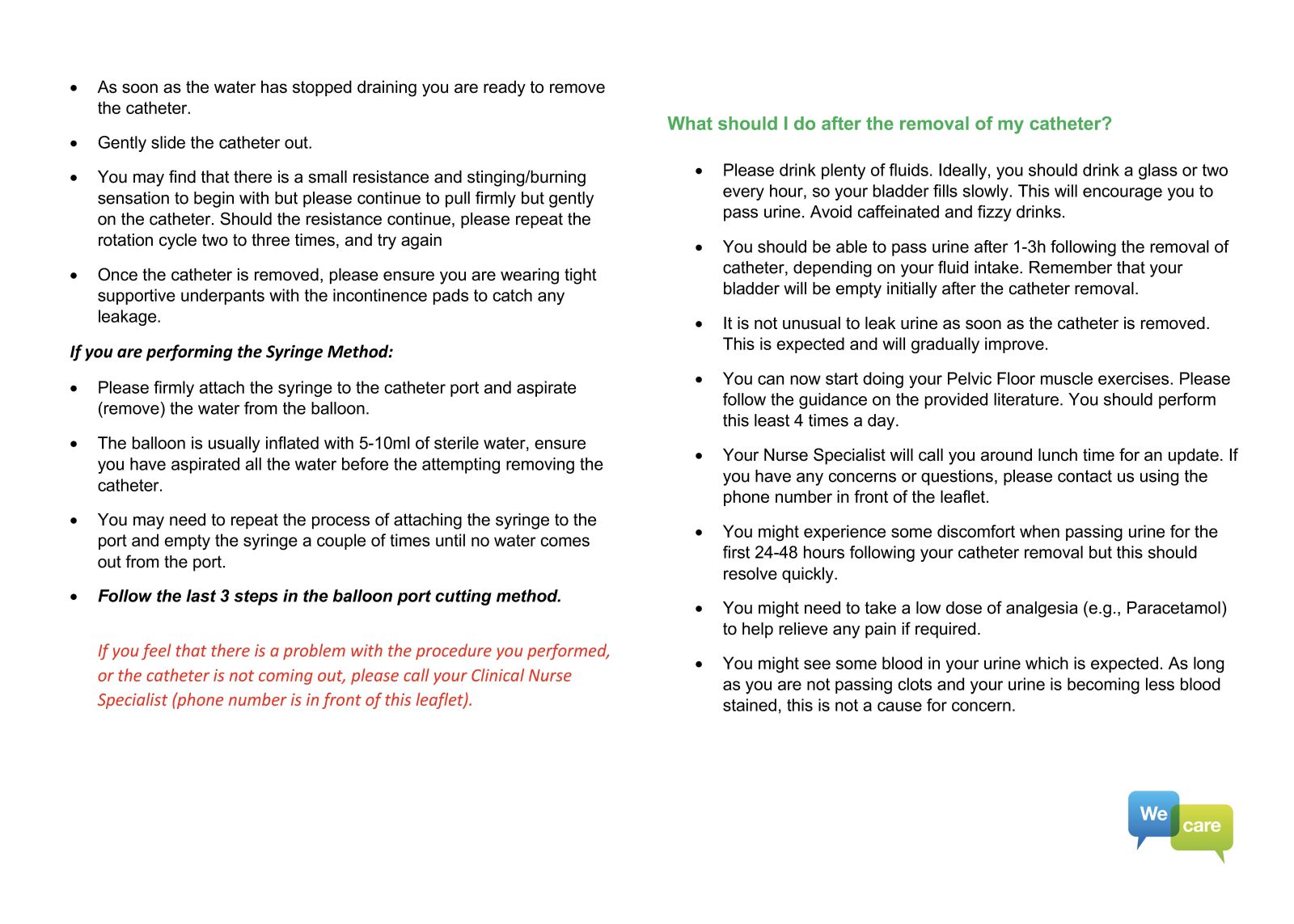
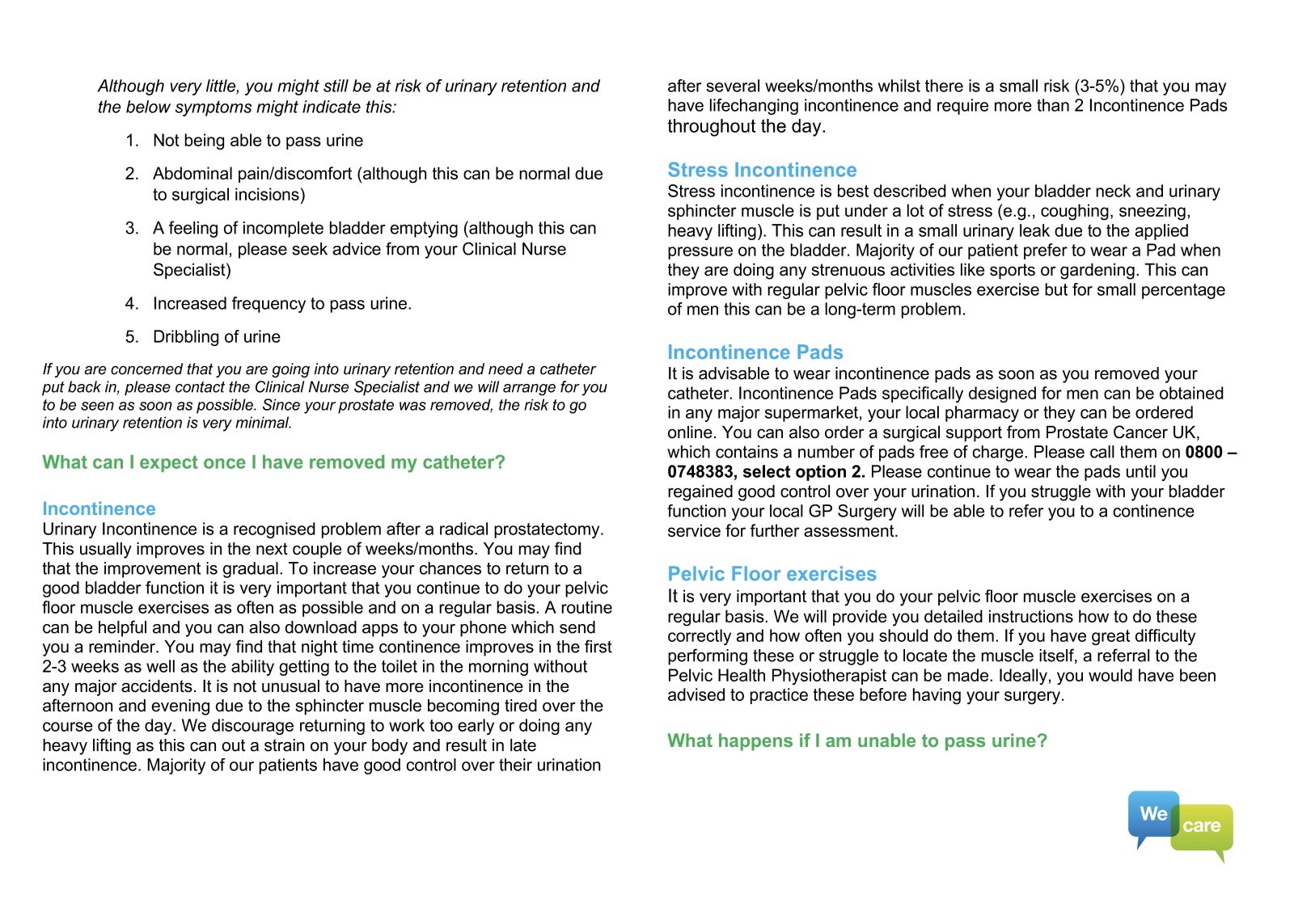
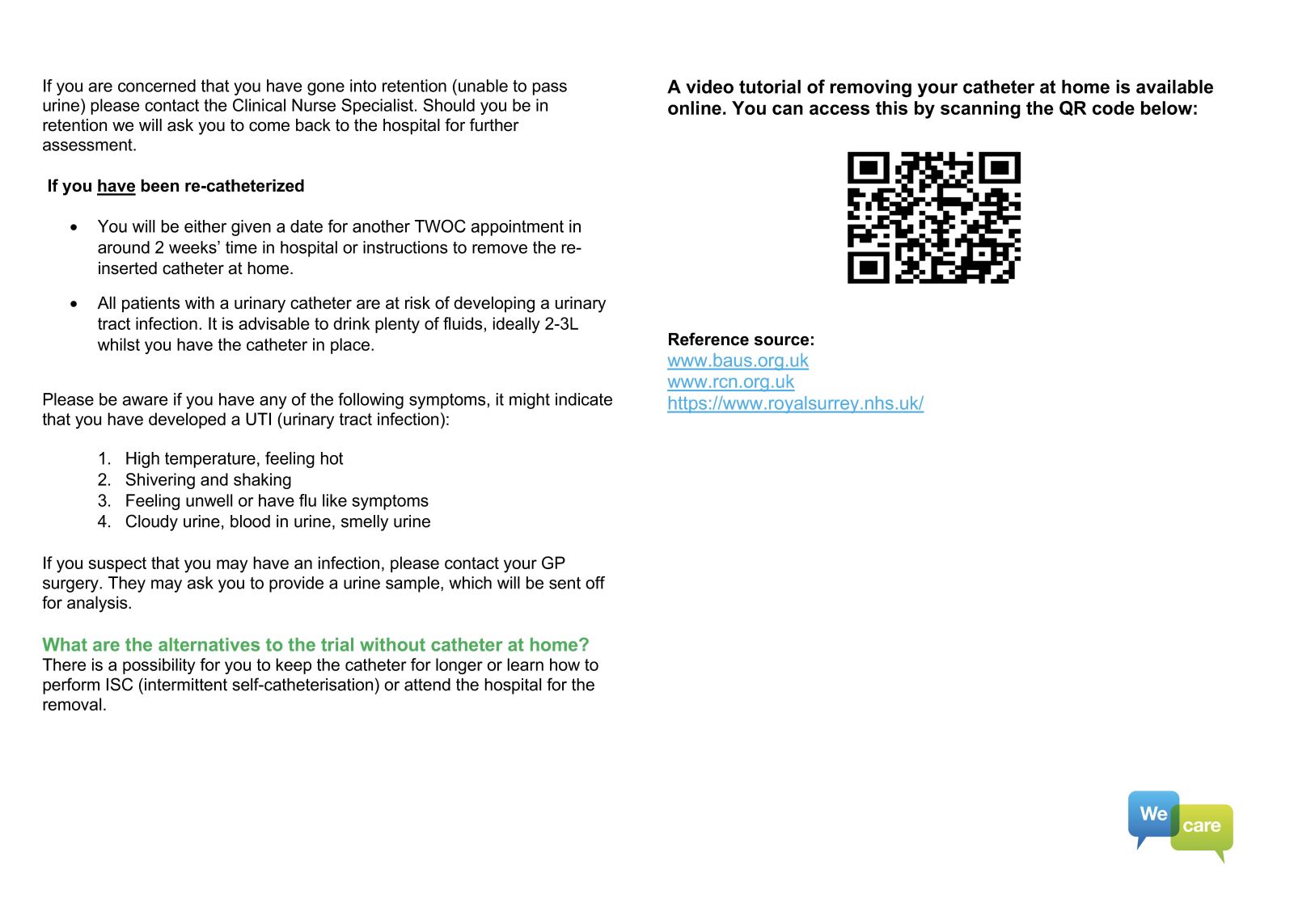
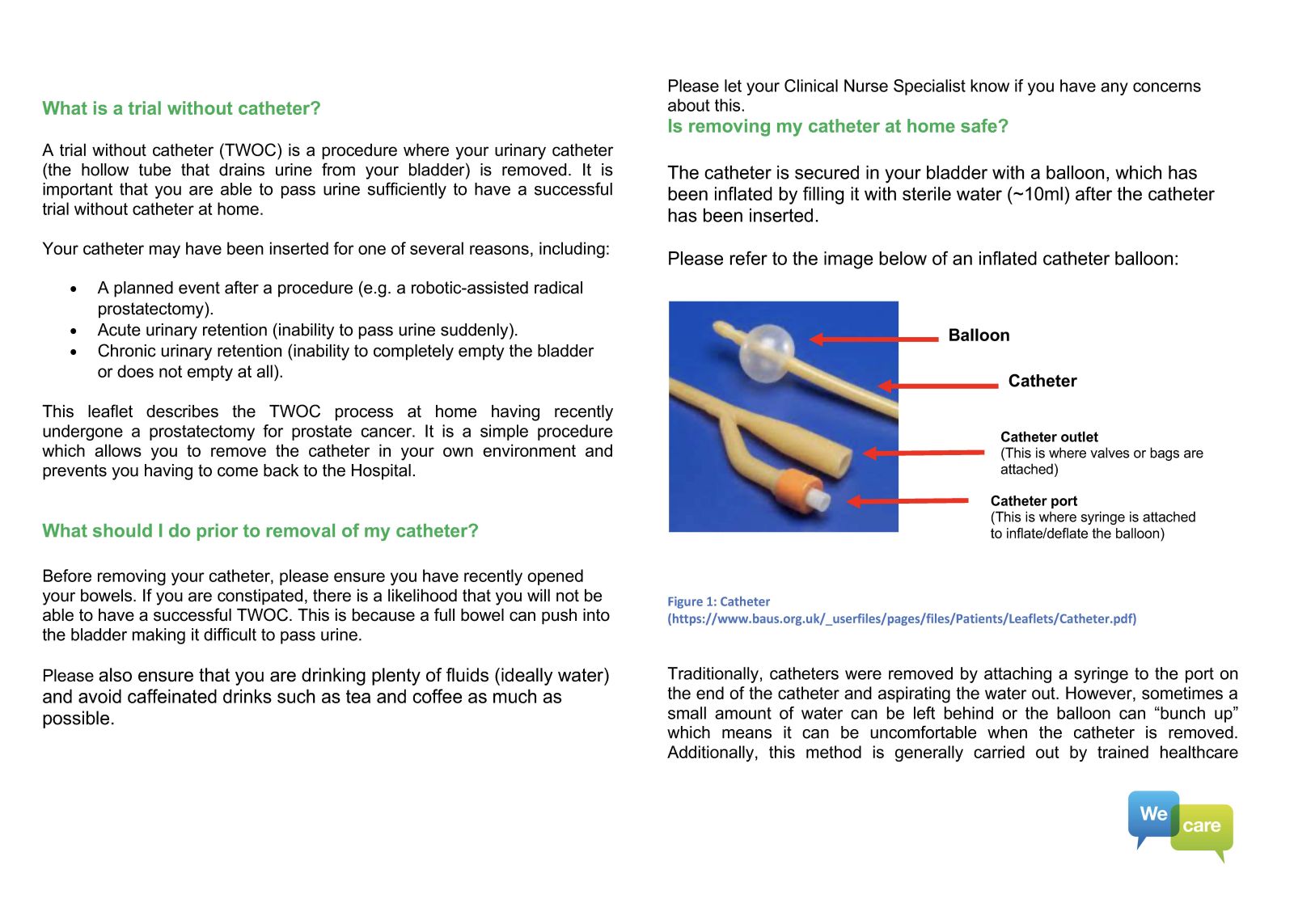
A patient leaflet (Appendix 1) was developed containing information about the procedure. The leaflet outlined two ways to remove the catheter: using the syringe or the scissors method if the syringe is not available.

Figure 1. The East Kent Hospitals University Foundation NHS Trust pathway for patients performing self-trial without catheter (TWOC) after a robotic-assisted laparoscopic prostatectomy (RALP). CNS = clinical nurse specialist.
Methods 

The self-TWOC programme took place from May 2024–July 2025 and included 102 patients. The exclusion criteria were: poor manual dexterity, patient preference, surgeon preference, and those with complex urethra-vesical anastomosis. 
 
During the pre-booked telephone appointments which happen 7–10 days post procedure, two proformas are followed which cover the following areas:
 

Phone call before self-TWOC 

  • Date of surgery
  • Is the self-TWOC leaflet available?
  • Is the syringe available?  
  • Has the patient opened their bowels? (if not, proceed with safety-netting; no failures recorded)
  • Have the wounds been checked and the dressing removed by the patient? 
  • Has the patient experienced significant haematuria or pain (if either of these are present, the patient is discussed with the operating surgeon as this may warrant a delay in TWOC and need a face-to-face consultation instead).   
The clinical nurse specialist then goes through the step-by-step procedure of how to remove the catheter and provides continence advice including pelvic floor exercises. After 2 hours, the clinical nurse specialist phones the patient back and follows the second proforma:
 

Phone call after self-TWOC

  • Amount of fluid intake
  • Has the patient passed urine successfully?
  • Ask if the pad is dry or wet, if applicable
  • Advice on starting a phosphodiesterase type-5 inhibitor if appropriate
  • Ensure follow-up appointment with consultant is in place 
  • Provision and explanation of prostate-specific antigen (PSA) blood test form (per-formed 4–6 weeks post-surgery to confirm undetectable levels).
In this study, patients were asked a series of questions about satisfaction rate and pain on catheter removal at the end of their second telephone call.

Results 

Data from 102 patients who took part in the self-TWOC programme from May 2024–July 2025 were analysed. This included clinical outcomes, environmental analysis and cost analysis.
 

Clinical outcomes 

All 102 (100%) patients had successful self-TWOCs and did not attend the emergency department for acute urinary retention. In terms of pain upon removal of catheter, 88 patients (86.27%) reported no pain, 11 (10.78%) experienced mild pain and the remaining three (2.94%) experienced moderate pain. None reported experiencing moderately severe or severe pain (Table 1).

When asked how satisfied they were with the procedure, no patient was either dissatisfied or slightly dissatisfied with the self-TWOC  (Table 2). A small percentage of patients were neutral (0.98%) and satisfied (1.96%), whereas 99 patients (97.05%) reported that they were very satisfied with the experience.
 

Environmental analysis 

Climate change poses a major threat to our health as well as our planet so we wanted to support the NHS’s world-leading ambition to become a net zero national health service (NHS England, 2020). Hence, we evaluated the impact of the project in terms of promoting environmental sustainability. The distance and estimated driving time saved by not attending a TWOC clinic at the hospital was calculated using Google maps with patients’ individual postcodes and the hospital’s postcode. The total time saved for all patients was calculated as 6,994 minutes, with an average of more than an hour per patient (68.5 minutes). The savings in terms of total distance travelled was calculated as 3,814 miles, an average of 37.4 miles per patient.
 
We also estimated the amount of carbon dioxide (CO2) saved from reduced car travel. The calculation is based on standard emission factors for different vehicle types. These were represented by the average amount of CO2 emitted by a standard vehicle with an engine size under 2000 cc over a set distance (37.4 miles). The savings in emissions as a result of this journey not being required would be approximately 0.019 tonnes for a diesel car, and 0.021 tonnes for either a petrol or plug-in hybrid car. CO2 emissions were estimated using UK government greenhouse gas conversion factors (Department for Environment, Food & Rural Affairs, 2025). As vehicle type was not recorded, values represent standardised estimates. 
Table 1. Patient assessment of pain on catheter removal (n=102) (scale of 1–5, where 1=no pain, 5=severe pain)
Score No of patients Percentage
1 (no pain) 88 86.27
2 (mild pain) 11 10.78
3 (moderate pain) 3 2.94
4 (moderately severe pain) 0 0
5 (severe pain) 0 0
 
Table 2. Satisfaction rate with self-trial without catheter (n=102) (scale of 1–5, where 1=not satisfied, 5=very satisfied)
Score No of patients Percentage
1 (not satisfied) 0 0
2 (slightly dissatisfied) 0 0
3 (neutral) 1 0.98
4 (satisfied) 2 1.96
5 (very satisfied) 99 97.05

Cost analysis 

The NHS Long-Term Plan strives to continually improve the quality of care it delivers, and requires efficiencies while reducing costs (Kwint and Hoskin, 2023). As part of this commitment, we calculated the cost savings for both the Trust and patients. We included the cost of every outpatient appointment (£151) (NHS England, 2026b). Travel costs were estimated using HM Revenue & Customs (2026) advisory fuel rates. An estimate of £16,497 cost savings was generated for all 102 patients involved in the study (Table 3): £15,402 savings to the trust and £1095 savings to patients.
Table 3. Estimated cost savings from this study
  Petrol car (£) Diesel car (£) Petrol hybrid (£)
Cost of outpatient appointment 151 151 151
Travel cost to and from hospital/patient (based on average miles calculated = 37.4) 5.24 5.5 5
Parking cost for 4 hours 5.5 5.5 5.5

Limitations of the study and challenges encountered 

No matter how well thought out, every research study faces challenges. There is no way to predict all possible variances throughout the process (Viera, 2023). The limitations of this study included:
  • We did not capture the number of patients who refused to perform self-TWOC
  • We did not capture whether the patients involved in the study would choose self-TWOC again if required in future.
We also encountered obstacles with the self-TWOC programme. Sometimes the clinical nurse specialists were unable to phone patients on time because a clinic was overrunning. Clinic availability occasionally caused delays, meaning that some self-TWOCs occurred on day 11. Patients who removed their catheters without CNS support were not included in the 102 analysed; numbers of these were not recorded.
 

Conclusions

Self-TWOC for RALP patients is an efficient, feasible, safe, and cost-effective approach, delivering key benefits not only to the organisation and the environment, but most importantly, to patient care and outcomes.

Appendix A. Self-TWOC patient leaflet. 

References

Braungart S, Goyal A (2019) Parental home removal of urethral catheters after urological surgery-a prospective benchmarking study. J Pediatr Urol 15(3): 252.e1-252.e4. https://doi.org/10.1016/j.jpurol.2019.03.018 
Cancer Research UK (2026) Prostate cancer statistics. https://www.cancerresearchuk.org/health-professional/cancer-statistics/statistics-by-cancer-type/prostate-cancer (accessed 16 April 2026)
Christiaans C, van Veen F, Blok B (2025) Patient satisfaction and quality of life in long-term urinary catheter users in the Netherlands. A nationwide survey study. EMJ Urol 13(1): 38–9. https://doi.org/10.33590/emjurol/EZCI7981 
Department for Environment, Food & Rural Affairs (2025) Government conversion factors for company reporting of greenhouse gas emissions. https://www.gov.uk/government/collections/government-conversion-factors-for-company-reporting (accessed 7 May 2026)
East Kent Hospitals University Foundation NHS Trust (2024) Robotic-assisted laparoscopic
prostatectomy: Kent and Canterbury Hospital. https://leaflets.ekhuft.nhs.uk/s3/leaflets/robotic-assisted-laparoscopic-prostatectomy-kent-and-canterbury-hospital/6c9c4c78-5cdb-4597-8f6f-3584c6293b34.p1724930721.pdf (accessed 16 April 2026)
HM Revenue & Customs (2026) Advisory fuel rates. https://www.gov.uk/guidance/advisory-fuel-rates (accessed 7 May 2026)
Kwint J, Hoskin L (2023) 7 Findings that could save the NHS money and improve care. https://doi.org/10.3310/nihrevidence_56221 (accessed 16 April 2026) 
Lunas JM, Holborn C, Appleyard R et al (2026) Comparison of self-removal and clinic-removal of catheter after robot-assisted laparoscopic prostatectomy. Eur J Oncol Nurs 80: 103072. https://doi.org/10.1016/j.ejon.2025.103072 
NHS England (2019) The NHS Long Term Plan. https://www.longtermplan.nhs.uk/ (accessed 7 May 2026)
NHS England (2020) Delivering a ‘Net Zero’ National Health Service. https://www.england.nhs.uk/greenernhs/wp-content/uploads/sites/51/2020/10/delivering-a-net-zero-national-health-service.pdf (accessed 16 April 2026)
NHS England (2026a) Neighbourhood health framework. https://www.gov.uk/government/publications/neighbourhood-health-framework/neighbourhood-health-framework (accessed 8 May 2026)
NHS England (2026b) National Cost Collection for the NHS. https://www.england.nhs.uk/costing-in-the-nhs/national-cost-collection/ (accessed 16 April 2026)
Rahman E, Penev B, Bhatti I et al (2025) Self-urinary catheter removal for urology day cases: a safe, efficient, sustainable, and patient-centred approach. Cureus 17(10): e94256. https://doi.org/10.7759/cureus.94256 
Samadi DB (2025) Best treatment options for prostate cancer in 2025. https://roboticoncology.com/post/best-treatment-options-for-prostate-cancer-in-2025 (accessed 16 April 2026)
Saville K, Bewley J (2025) Trial without catheter: an alternative approach. J Community Nurs 39(4): 44–9 
Viera C (2023) How to write limitations of the study (with examples). https://www.aje.com/arc/how-to-write-limitations-of-the-study (accessed 16 April 2026)