

Introduction 

Down syndrome or trisomy 21 is a common chromosomal abnormality, affecting 1 in every 800 live births in the UK. Up to 77% of affected children experiencing structural or functional gastrointestinal problems (Moore, 2008). Down syndrome impacts both the micro-anatomy and function of the enteric nervous system, as seen in human and animal models (Schill et al, 2019). This likely underlies many gastrointestinal disturbances in people with Down syndrome. Trisomy 21 causes some intellectual impairment in people with Down syndrome, but the connections between the brain, gastrointestinal system, and enteric nervous system are still not well understood. Neurotropic factors in embryonic brain development may also affect the development of the enteric nervous system, although the mechanisms are not yet clear (Moore, 2008).
 
Studies have shown that several stages of the development of the enteric nervous system may be impacted by trisomy 21. Factors include a reduced central pool of neuroblasts available to migrate into the enteric nervous system, abnormal types of neuroblasts, impaired synaptic nerve function, and early effects on migrating neuroblasts caused by germline gene mutations in key developmental genes. Additionally, potential somatic mutations resulting from changes in the local tissue environment may also play a role (Friedmacher and Puri, 2013). 
 
As a result, children with Down syndrome have a higher incidence of congenital abnormalities affecting the bowel such as Hirschsprung’s disease and anorectal malformations, as well as conditions such as coeliac disease and constipation. This article gives a brief overview of the most common bowel problems faced by children with Down syndrome.


A little boy with Down syndrome sitting at a table and eating.

Anorectal malformations 

Anorectal malformations are congenital anomalies affecting the anus and/or rectum. They result from abnormal development of the distal digestive tract and typically arise between the sixth and tenth weeks of embryonic development. 
 
These malformations present a spectrum of severity based on the extent of disruption to the anorectal canal and the presence of associated caudal anomalies, such as those involving the sacrum and spine. They are associated with a wide spectrum of other congenital abnormalities, including the genitourinary, spinal, cardiovascular, gastrointestinal, craniofacial and other systems (Moras et al, 2024). 
 
The estimated incidence of anorectal malformations has been reported as 1 in 2500 live births with the frequency of Down syndrome among infants with anorectal malformations reported to be 15 times higher than in the general population (Mishra et al, 2020). Surgical correction will always be required, and some infants may initially require formation of temporary stoma before correction of the abnormality. The exact surgical repair and ongoing management required depends on the extent of the malformation. Children with Down syndrome who have anorectal malformations have more postoperative complications than their typically developing peers which may be explained by an impaired immunological response (Martinelli and Staiano, 2011).
 

Coeliac disease 

Coeliac disease is a common autoimmune condition caused by gluten and related prolamins (proteins found in seeds of cereal grains and other plants) in genetically susceptible individuals. Coeliac disease can have different clinical manifestations including abdominal pain, bloating, constipation, diarrhoea and weight loss, dependent on gluten, coeliac disease-specific antibodies, HLA DQ2 or HLA-DQ8 haplotypes, and enteropathy (Husby et al, 2012).
 
Coeliac disease is estimated to affect 1 in 100 people in the UK. A study by Mårild et al (2013) found a sixfold increased risk of coeliac disease in individuals with Down syndrome compared to the general population. The link between Down syndrome and coeliac disease is still uncertain. Both share genetic risks associated with HLA genotypes on chromosome 6p21 and some non-HLA genes, but people with Down syndrome have HLA profiles similar to those of the general population. As a result, research is now targeting immune-related non-HLA loci in people with Down syndrome, including IFNAR1 and IFNAR2 on chromosome 21, which encode interferon-alpha receptors that influence the intestinal immune response in coeliac disease (Hom et al 2024).
 
The pathogenesis of coeliac disease involves an inappropriate adaptive immune response in which antibodies are formed that attack the small intestine and cause inflammation, villous atrophy, and difficulty absorbing nutrients. Coeliac disease can present with a variety of symptoms including faltering growth, abdominal pain, constipation, diarrhoea, sickness, bloating and tiredness. However, these symptoms and signs are not uncommon in children with Down syndrome, so coeliac disease may not be initially recognised. Delayed diagnosis of coeliac disease can lead to complications including malnutrition and iron or vitamin deficiencies. Systematic screening of children and adolescents with Down syndrome for coeliac disease is therefore vital.

Duodenal atresia 

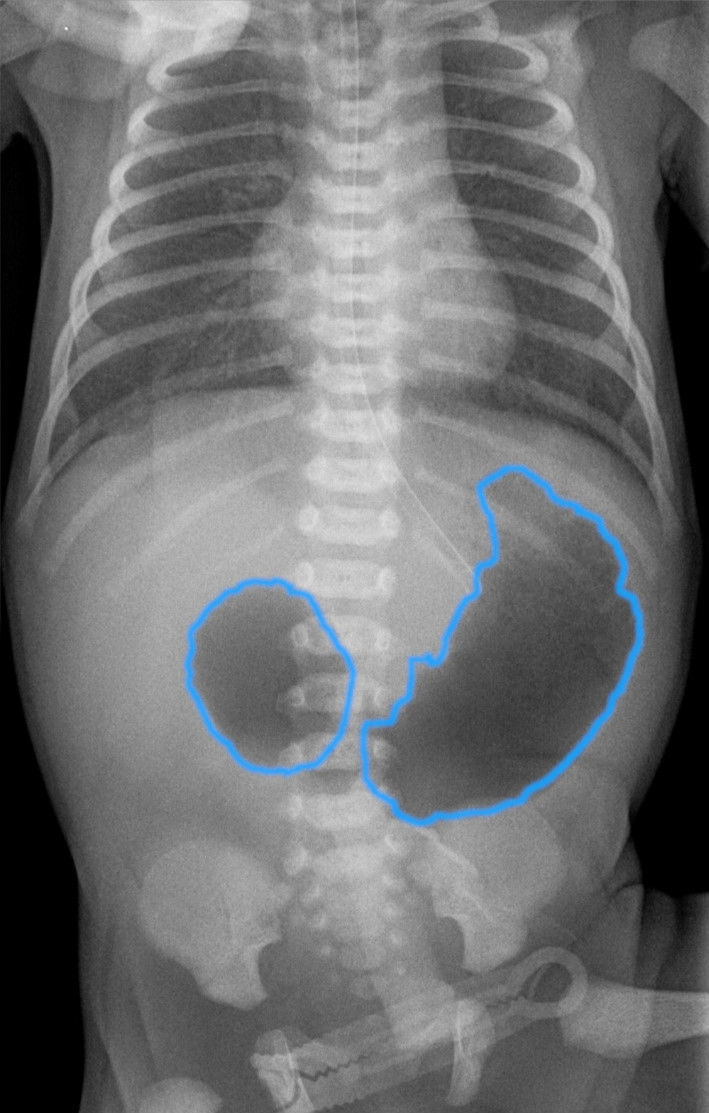
Duodenal atresia or stenosis arises from a failure of the duodenal lumen to recanalise during the eighth week of gestation. This results in an obstruction which effectively preventing the stomach from emptying. Classic presentation includes bilious vomiting and abdominal distention, often diagnosed by the typical ‘double bubble’ sign on plain abdominal radiographs (Figure 1). Duodenal atresia occurs in approximately 1.22 per 10 000 live births (Bethell et al, 2020) and requires surgical restoration of gastrointestinal continuity, typically performed within the first few days of life. 

Duodenal atresia affects around 3% children with Down syndrome worldwide (Atiyat et al, 2025) and around a third of children with duodenal atresia have Down syndrome, making it the most frequently associated chromosomal anomaly (Bethell et al, 2020). A study by Gely et al (2025) found that although trisomy 21 was not an increased risk factor for surgical complications, children with Down syndrome and duodenal atresia did have more postoperative complications related to wound healing and infection.
 

Functional constipation 

Chronic constipation remains one of the most common gastrointestinal symptoms experienced by both children and adults with Down syndrome (Martinelli and Staiano, 2011). Low fluid and fibre intake, alongside ‘holding on’ behaviours, are usually cited as contributary factors in the development of functional constipation in all children. As a result, standard therapy usually consists of dietary and fluid adjustment alongside stool softeners. 

However, in children and young people with Down syndrome a ‘one size fits all’ approach to treatment often does not work, resulting in the development of chronic constipation with its associated comorbidities, which can include death (NHS England, 2023). A more individualised approach to treatment should be taken as other factors often need to be considered.
 
Double-bubble sign in a patient with duodenal atresia.

Figure 1. Double-bubble sign in a patient with duodenal atresia. 
Peristalsis and the time taken for the stool to pass through the gut can play an important role in the development of constipation. Gut motility is a complex physiological process resulting from the coordinated interaction among intestinal smooth muscle, interstitial cells of Cajal, which function as pacemaker cells, and the enteric nervous system (Kenny et al, 2010). Trisomy 21 affects the development of the enteric nervous system potentially resulting in gut dysmotility. Combined with the low abdominal muscle tone often present in people with Down syndrome, this results in slower gut transit times (Ciciora et al, 2023).
 
Kwiatkowska and Krogulska (2021) suggested that peristalsis may also be influenced by the gut microbiota which potentially plays a part in the development of constipation. It is important to ensure that children with Down syndrome have a healthy gut microbiome, as they may already have a problem with the motility of their gut. As many children with Down syndrome undergo repeated antibiotic treatment the addition of a probiotic to rebalance the microbiome may be beneficial. Probiotics may help with constipation and other gut issues by altering gut microbiota, boosting lactate and short-chain fatty acid production, lowering pH, and improving colonic movement and transit time (Gomes and Morais, 2019).
 
Constipation may initially be missed because individuals with Down syndrome may have difficulty communicating any symptoms. Constipation may also go unnoticed even with the child passing regular, loose stools, as soft stool can pass around hard stool stuck in the rectum. Parents are also sometimes told that constipation is part of their child having Down syndrome and as a result it is not always treated appropriately. Affected children should also be screened for coeliac disease, because of its higher prevalence in those with Down syndrome, particularly if symptoms persist despite optimum treatment.
 
An individualised approach to treatment of constipation in people with Down syndrome is vital to consider all the potential contributary factors and ensure timely, effective resolution. Management of constipation in children and adults with Down syndrome requires a multifaceted approach. This involves optimising fluid intake, modifying diet, and providing suitable laxative treatments—sometimes using stool softeners and stimulants together. Other helpful steps include making sure the correct sitting posture is used on a potty or toilet, encouraging physical activity like exercise and abdominal massages, and 'cycling' an infant's or pre-mobile child’s legs.
 
To ensure optimum treatment success affected individuals should be kept under regular review and treatments adjusted as necessary. 

Hirschsprung’s disease

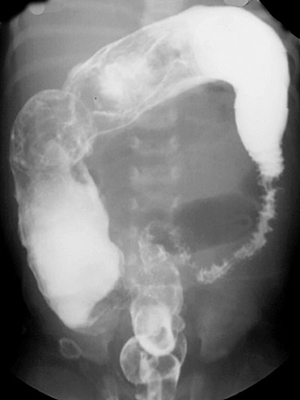
Hirschsprung’s disease is the most common congenital disorder affecting gut motility. It is marked by a lack of ganglion cells (aganglionosis) in varying lengths of the distal bowel resulting it being unable to relax, causing functional colonic obstruction over time (Figure 2). Infants with Hirschsprung’s disease typically show signs of intestinal blockage soon after birth, which can be fatal if not treated. The standard treatment is surgery to remove the affected section of bowel and connect healthy, normally innervated (ganglionic) intestine closer to the anal margin.

Hirschsprung’s disease occurs in 1 in 5000 live births, but the incidence increases dramatically in children with Down syndrome to about 1 in 40. The higher prevalence of Hirschsprung’s disease in children with Down syndrome has not yet been fully explained, although it is likely caused by overexpression of one or more Hsa21 genes (Schill et al, 2019). 
 
Following surgery most children with Hirschsprung’s disease go on to have good bowel function and maintain continence, within varying levels of a structured bowel management programme. However, some children with Down syndrome continue to have persistent bowel dysfunction even after surgical treatment of Hirschsprung’s disease. Friedmacher and Puri (2013) found that having both Hirschsprung’s disease and Down syndrome leads to higher rates of enterocolitis before and after surgery, worse functional outcomes, and greater mortality.
 
A comparative study carried out by Travassos et al (2011) found that compared to their typically developing peers, children with Down syndrome have a higher rate of postoperative complications following surgery for Hirschsprung’s disease and a longer hospital stay. In follow-up most children with Down syndrome had increased problems with constipation and a higher incidence of enterocolitis.
 

Conclusions 

Research indicates that children with Down syndrome are at higher risk for both congenital and acquired bowel problems. Treatment should be holistic and tailored to each affected individual to effectively address all contributing factors. There is a notable increase in the risk of post-surgical complications, which must be taken into consideration. Hirschsprung’s disease and coeliac disease should always be excluded in children with unresolved ongoing constipation despite optimum treatment. A thorough understanding of all possible factors can help improve treatment and management outcomes for both children and adults with Down syndrome and any associated bowel conditions.
 

Acknowledgements

Figure 1 is reproduced from Hellerhoff under a CC BY-SA 4.0 license , via Wikimedia Commons. Figure 2 is reproduced from Copyrightfreeimages, CC0, via Wikimedia Commons
Abdominal X-ray showing Hirschsprung’s disease.

Figure 2. Abdominal X-ray showing Hirschsprung’s disease.

References

Atiyat DK, Al-Nusair DA, Alhajahjeh A, Al-Awadi MY, Aborajooh E (2025) Global prevalence of duodenal atresia in trisomy 21: a systematic review and meta-analysis. Eur J Pediatr Surg. 35(3):208-218. https://doi.org/10.1055/a-2471-6435 
Bethell GS, Long AM, Knight M, Hall NJ; BAPS-CASS (2020) The impact of trisomy 21 on epidemiology, management, and outcomes of congenital duodenal obstruction: a population-based study. Pediatr Surg Int. 36(4):477-483. https://doi.org/10.1007/s00383-020-04628-w 
Ciciora SL, Manickam K, Saps M (2023) Disorders of gut-brain interaction in a national cohort of children with Down syndrome. J Neurogastroenterol Motil. 29(1):94-101. https://doi.org/10.5056/jnm22055 
Friedmacher F, Puri P (2013) Hirschsprung's disease associated with Down syndrome: a meta-analysis of incidence, functional outcomes and mortality. Pediatr Surg Int. 29(9):937-46. https://doi.org/10.1007/s00383-013-3361-1 
Gely Y, Moreci R, Roberts H, Danos D, Zagory J (2025) Trisomy 21 children with duodenal atresia or anorectal malformation: NSQIP-P Surgical Outcomes Study. J Surg Res. 310:194-202. https://doi.org/10.1016/j.jss.2025.03.020 
Gomes DOVS, Morais MB (2019) Gut microbiota and the use of probiotics in constipation in children and adolescents: systematic review. Rev Paul Pediatr. 38:e2018123. https://doi.org/10.1590/1984-0462/2020/38/2018123 
Hom B, Boyd NK, Vogel BN et al (2024) Down syndrome and autoimmune disease. Clin Rev Allergy Immunol. 66(3):261-273. https://doi.org/10.1007/s12016-024-08996-2 
Husby S, Koletzko S, Korponay-Szabó IR et al; ESPGHAN Working Group on Coeliac Disease Diagnosis; ESPGHAN Gastroenterology Committee; European Society for Pediatric Gastroenterology, Hepatology, and Nutrition (2012) European Society for Pediatric Gastroenterology, Hepatology, and Nutrition guidelines for the diagnosis of coeliac disease. J Pediatr Gastroenterol Nutr. 54(1):136-60. https://doi.org/10.1097/MPG.0b013e31821a23d0 
Kenny SE, Tam PK, Garcia-Barcelo M (2010) Hirschsprung's disease. Semin Pediatr Surg. 19(3):194-200. https://doi.org/10.1053/j.sempedsurg.2010.03.004 
Kwiatkowska M, Krogulska A (2021) The significance of the gut microbiome in children with functional constipation. Adv Clin Exp Med. 30(4):471-480. https://doi.org/10.17219/acem/131215 
Mårild K, Stephansson O, Grahnquist L, Cnattingius S, Söderman G, Ludvigsson JF (2013) Down syndrome is associated with elevated risk of celiac disease: a nationwide case-control study. J Pediatr. 163(1):237-42. https://doi.org/10.1016/j.jpeds.2012.12.087 
Martinelli M, Staiano A (2011) Motility problems in the intellectually challenged child, adolescent, and young adult. Gastroenterol Clin North Am. 40(4):765-75, viii. https://doi.org/10.1016/j.gtc.2011.09.009 
Mishra D, Sehgal G, Verma RK, Rani A (2020) Association of trisomy 21 with anorectal malformation: a cytogenetic study. International Journal of Research in Medical Sciences. 8(5):1808–1812. https://doi.org/10.18203/2320-6012.ijrms20201932 
Moore SW (2008) Down syndrome and the enteric nervous system. Pediatr Surg Int. 24(8):873-83. https://doi.org/10.1007/s00383-008-2188-7 
Moras P, Zarfati A, Bagolan P, Conforti A, Toscano A, Iacobelli BD (2024) Anorectal malformations (ARM) and VACTERL association and severity of congenital heart diseases (CHD): Experience of 396 consecutive patients in a tertiary center. Pediatr Neonatol. 65(4):381-385. https://doi.org/10.1016/j.pedneo.2023.08.011 
NHS England (2023) Constipation resources for people with a learning disability https://www.england.nhs.uk/publication/constipation-resources-for-people-with-a-learning-disability/ (accessed 29 January 2026)
Schill EM, Wright CM, Jamil A, LaCombe JM, Roper RJ, Heuckeroth RO (2019) Down syndrome mouse models have an abnormal enteric nervous system. JCI Insight. 5(11):e124510. https://doi.org/10.1172/jci.insight.124510 
Travassos D, van Herwaarden-Lindeboom M, van der Zee DC (2011) Hirschsprung's disease in children with Down syndrome: a comparative study. Eur J Pediatr Surg. 21(4):220-3. https://doi.org/10.1055/s-0031-1271735